


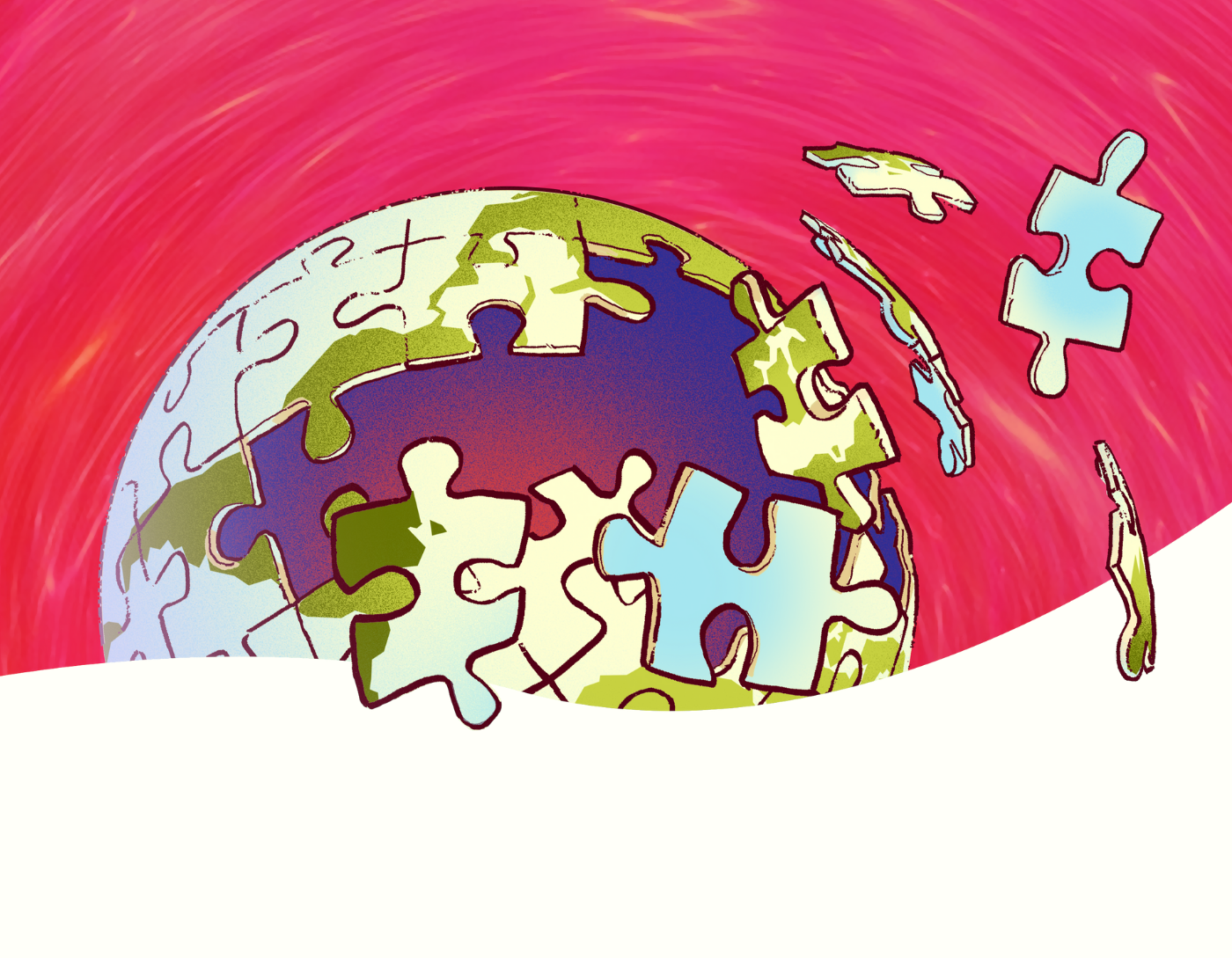
The New Fragmented Reality of Globalisation
Globalisation is a concept that has taken hold of all aspects of our lives. We live in a globalised world where the interconnectedness of countries and regions is higher than ever, with nations constantly looking for new ways to strengthen their ties with one another. Or are they? In recent years, talk of “the end of globalisation” or some kind of “slowbalisation” has emerged, suggesting a decline in growth of international cooperation since the financial crisis of 2008. At the very least, we could say that we have entered an era of selective globalisation: countries remain open where it benefits them but ignore joint responsibilities to better the world as a whole.
Globalisation is the end-product of the “death of distance”. Historically, due to developments in transportation and communication coupled with increased cooperation among countries, the world has shrunk in size. Something that used to take several weeks to deliver, whether information or physical goods, now takes only a few hours by plane or a few seconds on the internet. But the death of distance hasn’t been fully realised, as countries are ideologically and culturally tearing themselves apart like never before. There is a fundamental unwillingness and lack of action to improve seemingly shared goals, such as combating global warming and pacifying the constantly rising tensions all over the world. We’re on a playing field without a defined set of rules: every country takes steps in whichever direction it pleases, lacking any sense of responsibility.
One cannot help but compare this to the trade negotiation rounds after the World War II, starting with the famous Bretton Woods negotiations in 1944, in which a global monetary regime was put in place to further improve interconnectedness of countries in the era of globalisation. Eight rounds of multilateral trade negotiations were successfully implemented before the infamous ninth and last one, the Doha Round (2001–), which has still not been completed. It all comes down to the same thing: countries are willing to promote globalisation, shared systems and goals only as long as it is in their national interest. The Doha Round got stuck between irreconcilable differences between developed and developing nations; the idea of globalisation and development of shared goals has been buried under each nation’s determination to act only in ways that benefit itself, ignoring anything not directly linked to its own success.
In his article, Elliott (2024) discusses how we’re not experiencing the end of globalisation but rather a new form of it, glocalisation, in which “shorter supply chains, an emphasis on building back domestic manufacturing capacity, and a more strategic role for government” are highlighted1. According to the article, this change towards localisation might be due to overreliance on efficiency over security, sparked by recent crises such as the pandemic and political tensions around the globe. Although one can understand the worry and the need to ensure national security, aren’t these crises shared among all, and therefore better tackled internationally and together, rather than only at a national level?
Only the future can tell us how these new influences will reform globalisation: is the end of globalisation here, or are we approaching a future of connected fragmentation, in which countries select only parts of globalisation based on their benefits?
References
1. Elliott, L. (21.1.2024). Globalisation is not dead, but it is fading: ‘glocalisation’ is becoming the new mantra.


